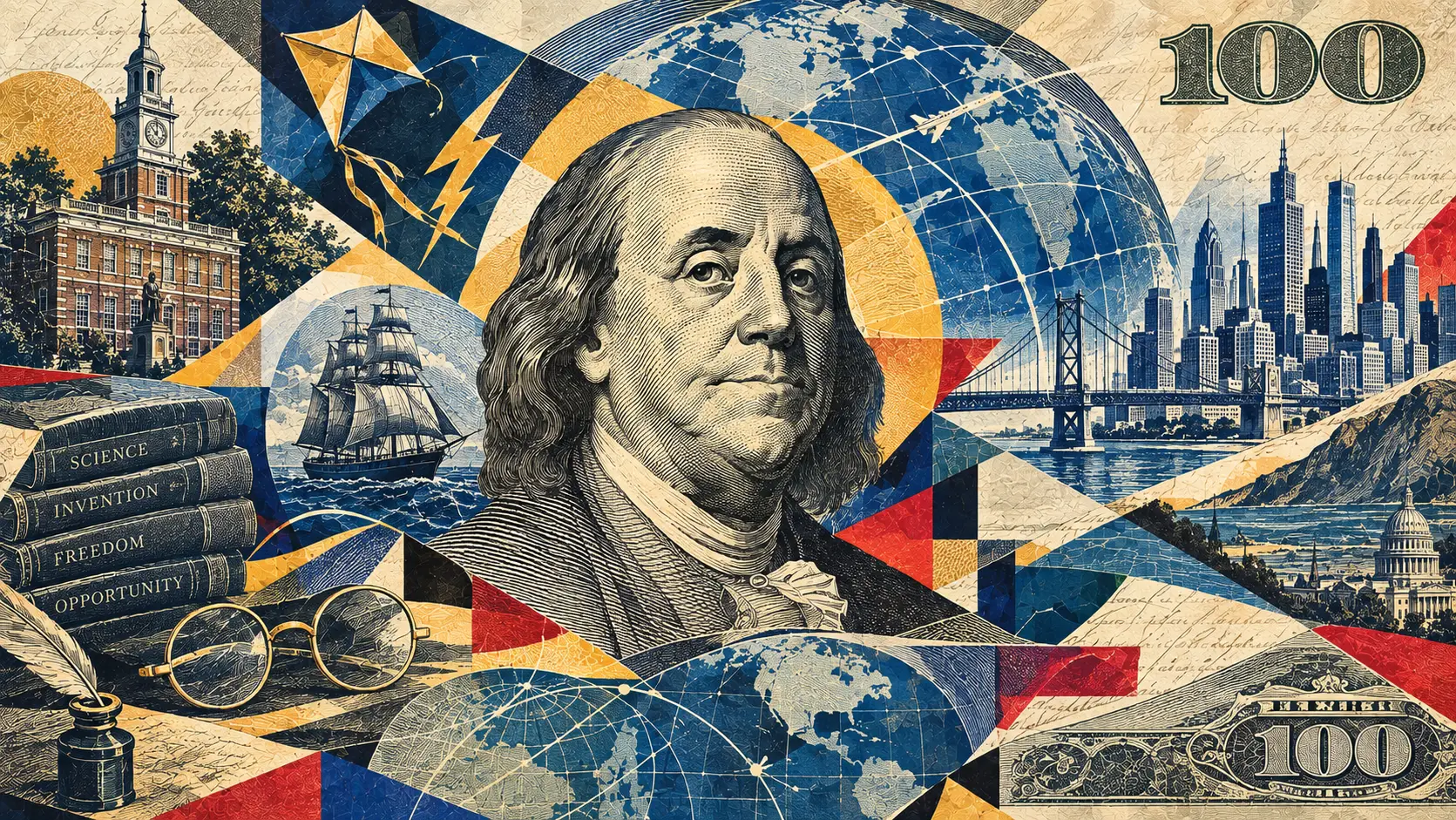

Ten extraordinary American developments that were financed, in part, by foreign investors seeking something more than a return: a future in the United States.
Look closely at the American skyline and you will find a story that is rarely told.
The towers of Manhattan. The revitalization of Brooklyn. Hotels in Las Vegas. New neighborhoods in Miami. Film studios, transportation hubs, retail centers and university-adjacent developments.
They look like monuments to American capital.
But some of them were built, at least in part, with money that crossed an ocean first.
For decades, the United States has operated one of the world’s most unusual immigration-and-investment programs: EB-5, the employment-based fifth preference immigrant investor category.
Created by Congress in 1990, EB-5 was designed around a straightforward proposition: foreign investors could put capital into American commercial enterprises, help create American jobs and, if they met the program’s requirements, pursue permanent residence. Today, the program generally requires a $1.8 million investment, or $900,000 when the investment qualifies for a targeted employment area, alongside the creation or preservation of at least 10 qualifying full-time jobs. (USCIS)
The numbers are important.
But the buildings are the better story.
Because once you understand EB-5, you begin to see American real estate differently.
The immigrant isn’t simply the person arriving at the front door.
Sometimes, the immigrant helped finance the building itself.
Here are ten remarkable examples.
1. Hudson Yards — New York City
The city within the city
Few developments better illustrate the scale of EB-5 capital than Hudson Yards.
Built over Manhattan’s West Side rail yards, Hudson Yards transformed one of the largest remaining development sites in Manhattan into a new neighborhood of skyscrapers, offices, residences, restaurants, shops, public spaces and cultural attractions.
The project is commonly described as one of the largest private real-estate developments in American history.
And foreign immigrant capital played a significant role.
Related Companies, the project’s principal developer, raised approximately $1.2 billion in EB-5 capital for Hudson Yards according to contemporary reporting. (Axios)
That is an extraordinary number.
Think about what $1.2 billion represents.
It is not a handful of wealthy individuals buying Manhattan apartments.
It is thousands of individual decisions made by people around the world to place capital into an American economic project—often while simultaneously pursuing a pathway to American permanent residence.
The irony is almost poetic.
Hudson Yards was designed as a symbol of New York’s future.
Some of the people who helped finance that future were hoping to become New Yorkers themselves.
There is, however, an important caveat. Hudson Yards’ use of EB-5 financing generated significant controversy over how the program’s “targeted employment area” rules were applied to the project. That history is part of the story too—and a reminder that EB-5 is an investment program with regulatory and political complexity, not simply a government-backed real-estate fund. (Axios)
2. Barclays Center & Pacific Park — Brooklyn
From a rail yard to a neighborhood
Across the East River, another ambitious transformation was taking place.
What began as Atlantic Yards—later known as Pacific Park—was conceived as a massive mixed-use redevelopment in Brooklyn.
Its most recognizable component is the Barclays Center, home of the NBA’s Brooklyn Nets.
But the larger vision went far beyond an arena: residential buildings, infrastructure and a new neighborhood were part of the plan.
The project became one of the largest recipients of EB-5 capital in the United States, with estimates of roughly $577 million raised through EB-5 financing. (Kapin PLLC)
Consider the symbolism.
A global basketball arena in Brooklyn—one of America’s most culturally diverse boroughs—was partly financed by capital from people trying to build lives in America.
The architecture is American.
The capital was global.
3. City Point — Brooklyn
Where immigrant capital became everyday life
Not every immigrant-financed project is a skyscraper.
Sometimes it is simply the place where people go shopping on Saturday.
City Point, in Downtown Brooklyn, became a major retail and residential complex adjacent to one of New York City’s busiest transportation hubs.
The project received a $200 million EB-5 loan.
Its retail component encompasses roughly 650,000 square feet and includes familiar names such as Target, Trader Joe’s, Primark, Lululemon and Alamo Drafthouse Cinema. (NYCCIP)
And this project has a particularly remarkable immigration statistic.
The $200 million EB-5 offering was fully repaid, and according to the New York City Regional Center, 1,121 investors and family members achieved permanent residency through the City Point offering. (PR Newswire)
That means the story isn’t simply about a building.
For more than a thousand people, the project was connected to a much larger life decision.
Capital went into Brooklyn.
Families gained a potential future in America.
4. Four Seasons Hotel New York Downtown — Manhattan
Luxury, skyscrapers and global capital
At 30 Park Place in Lower Manhattan, the Four Seasons Hotel New York Downtown occupies the lower portion of one of the city’s most recognizable modern towers.
The project involved Silverstein Properties and incorporated hotel, residential and mixed-use components.
EB-5 financing contributed approximately $250 million to the project. (Stern School of Business)
This is one of the characteristics that makes EB-5 fascinating.
Foreign investors weren’t necessarily investing in an obscure startup.
They were financing projects alongside some of the most sophisticated real-estate companies in the world.
Their money could sit inside the same capital stack as institutional debt and developer equity.
The difference was that their investment also had an immigration dimension.
5. 701 Seventh Avenue / Times Square — New York City
Buying into the world’s most famous crossroads
Times Square may be the ultimate symbol of American commercial culture.
Billboards.
Broadway.
Hotels.
Retail.
Tourists from every country on Earth.
One of its major redevelopment projects, 701 Seventh Avenue, also became a significant EB-5-financed development.
The project raised approximately $200 million in EB-5 capital, according to historical industry and academic research. (Stern School of Business)
There is something especially fitting about the location.
The EB-5 program was designed around the idea of attracting foreign capital to America.
Times Square is where the world comes to see America.
At 701 Seventh Avenue, those two ideas literally met.
6. Steiner Studios — Brooklyn
Hollywood’s New York cousin
Brooklyn’s film industry has become a major part of the city’s creative economy.
At the center of it is Steiner Studios, one of the largest film and television production facilities in the United States outside Hollywood.
EB-5 capital helped finance its expansion.
Historical estimates put total EB-5 financing for the project at roughly $195 million, while later phases of Steiner Studios have continued to receive EB-5 financing. (Kapin PLLC)
That makes Steiner particularly interesting.
Immigrant capital wasn’t merely financing apartments for immigrants.
It was financing the infrastructure used to produce American stories.
Films.
Television.
Sets.
Sound stages.
The global audience consumes the finished product.
But some of the capital behind the production infrastructure came from people who themselves were looking to become part of America.
7. SLS Las Vegas — Nevada
From the Sahara to a new Las Vegas
Las Vegas has always been a city built on reinvention.
The historic Sahara Hotel was transformed into the SLS Las Vegas, a major hotel and casino redevelopment on the Strip.
The project reportedly raised more than $115 million in EB-5 financing, including capital from hundreds of Chinese investors. (Kapin PLLC)
Las Vegas is perhaps the perfect setting for an immigrant-investor story.
The city itself is an improbable experiment in turning desert into destination.
Its hotels are built to attract the world.
And in the case of SLS, some of the people financing that transformation were themselves looking to make America their home.
8. Panorama Tower — Miami
The immigrant city gets immigrant capital
Miami has long been one of America’s most international cities.
Its population, culture and economy are deeply intertwined with Latin America, the Caribbean, Europe and increasingly the rest of the world.
It is therefore fitting that one of Miami’s defining towers, Panorama Tower, also became part of the EB-5 story.
The massive residential tower in Brickell reportedly raised approximately $50 million through EB-5 financing. (Kapin PLLC)
Panorama is a reminder that immigrant capital doesn’t flow only toward New York.
It follows communities.
It follows opportunity.
And increasingly, it follows cities where international families can imagine themselves building a new chapter.
9. George Washington Bridge Bus Station — Manhattan
Immigration capital doesn’t only build luxury
Perhaps one of the most revealing examples is not a luxury tower at all.
It is a transportation hub.
The redevelopment of the George Washington Bridge Bus Station in Upper Manhattan transformed an aging transportation facility into a modern transit and retail center.
Two EB-5 offerings provided approximately $91 million in financing for the redevelopment. (PR Newswire)
The retail space increased dramatically, while the project modernized an important piece of New York’s transportation infrastructure. (NYCCIP)
This matters because the popular image of EB-5 often revolves around luxury real estate.
But the program has also financed infrastructure, transportation, technology, manufacturing and community-oriented developments.
The immigrant investor story is therefore bigger than condos.
It is about capital formation.
10. KPMG Plaza at HALL Arts — Dallas
America’s immigrant economy isn’t just coastal
The EB-5 story is often told through New York.
But immigrant capital has also helped reshape America’s interior cities.
In Dallas, KPMG Plaza at HALL Arts became an 18-story office tower and part of the city’s expanding Arts District.
Approximately $65 million in EB-5 investment supported its construction, helping generate nearly 2,000 jobs according to the Commercial Real Estate Development Association. (Creda Global)
The lesson is important.
The American opportunity story isn’t confined to Manhattan, Miami or Los Angeles.
Dallas.
Phoenix.
Charlotte.
Pittsburgh.
Salt Lake City.
Nashville.
Across the United States, foreign capital has increasingly become part of the financing ecosystem behind American development.
The bigger story isn’t real estate
The buildings are spectacular.
But the more interesting story is what happens behind them.
EB-5 creates a peculiar intersection between immigration, finance and economic development.
An investor in Shanghai can put capital into a project in Brooklyn.
A family in Mumbai can invest in an American hotel.
An entrepreneur in São Paulo can consider a development in Miami.
A physician in Seoul can invest in a project in Texas.
The money travels first.
Then, potentially, the family does.
This is one reason EB-5 is such an unusual American institution.
It recognizes something that modern globalization has made increasingly obvious:
People do not move independently of capital.
They move with it.
They invest it.
They create companies with it.
They buy homes with it.
They employ people with it.
And sometimes they use it to help finance the cities they eventually call home.
America’s greatest export may be opportunity
There is another dimension to the EB-5 story that deserves attention.
Many immigrants eventually stop being investors.
They become entrepreneurs.
Doctors.
Engineers.
Restaurant owners.
Developers.
Scientists.
Professors.
Artists.
Builders.
Some eventually become employers themselves.
That is the deeper historical pattern of American immigration.
The immigrant arrives as an outsider.
Then gradually becomes part of the economic infrastructure.
And sometimes, eventually, helps build it.
EB-5 simply makes that transition unusually visible.
You can trace the capital.
You can trace the projects.
You can trace the jobs.
And in some cases, you can trace the families who received permanent residency.
City Point provides a striking example: the New York City Regional Center says its offering ultimately helped 1,121 investors and family members achieve permanent residency, while the $200 million investment was fully repaid. (PR Newswire)
The building remains in Brooklyn.
The investors’ lives moved forward.
A word of caution: immigrant capital is still investment capital
The romantic version of this story needs one important footnote.
EB-5 is not a guaranteed investment.
The government does not guarantee that investors will receive their money back, and immigration eligibility depends on satisfying the program’s legal requirements.
There have also been serious failures and fraud cases in the history of EB-5, including the notorious Jay Peak scandal in Vermont, where hundreds of foreign investors were harmed. (The New Yorker)
That is why EB-5 should never be understood as simply:
Give America money. Get a Green Card.
The reality is considerably more complicated.
Investments must satisfy specific statutory and regulatory requirements. Projects have their own financial risks. Regional centers and sponsors have different histories. Securities laws apply. Immigration outcomes depend on the investor’s individual circumstances and the project’s compliance with the applicable requirements.
For anyone considering EB-5, professional immigration and investment advice is essential.
The American skyline has a global balance sheet
Perhaps that is the most fascinating thing about looking at America through the lens of immigration.
We tend to think of immigration as something that happens at airports.
A person lands.
They go through customs.
They receive a visa.
They rent an apartment.
They start a job.
But immigration can begin much earlier.
Sometimes it begins with a wire transfer.
With a business plan.
With a decision to bet on a country thousands of miles away.
With the belief that a family’s future might be better somewhere else.
Look again at Hudson Yards.
Look at Brooklyn.
Look at Miami.
Look at Las Vegas.
Look at Dallas.
The buildings are American.
But some of the money that helped build them came from people who were not yet American.
And that may be one of the most compelling stories in modern immigration:
America doesn’t only attract immigrants.
Immigrants help build America.
The Expat Mall takeaway
For Expat Mall, the lesson goes beyond EB-5.
The global expat economy is often described in terms of what people consume after they move abroad: housing, healthcare, banking, insurance, education, travel, legal services and commerce.
But there is another side.
Expats are also capital.
They are investors.
Founders.
Lenders.
Buyers.
Employers.
Franchisees.
Developers.
And eventually, in many cases, citizens and community builders.
The next generation of platforms serving globally mobile people should therefore think beyond where expats live.
The more interesting question may be:
What are expats building?
That is the story Expat Mall intends to follow.